

TMS Therapy for Depression in Brooklyn
A non-invasive, FDA-cleared treatment for adults whose depression has not improved enough with antidepressant medication. No Meds. No Surgery. Just Relief.
What is TMS?
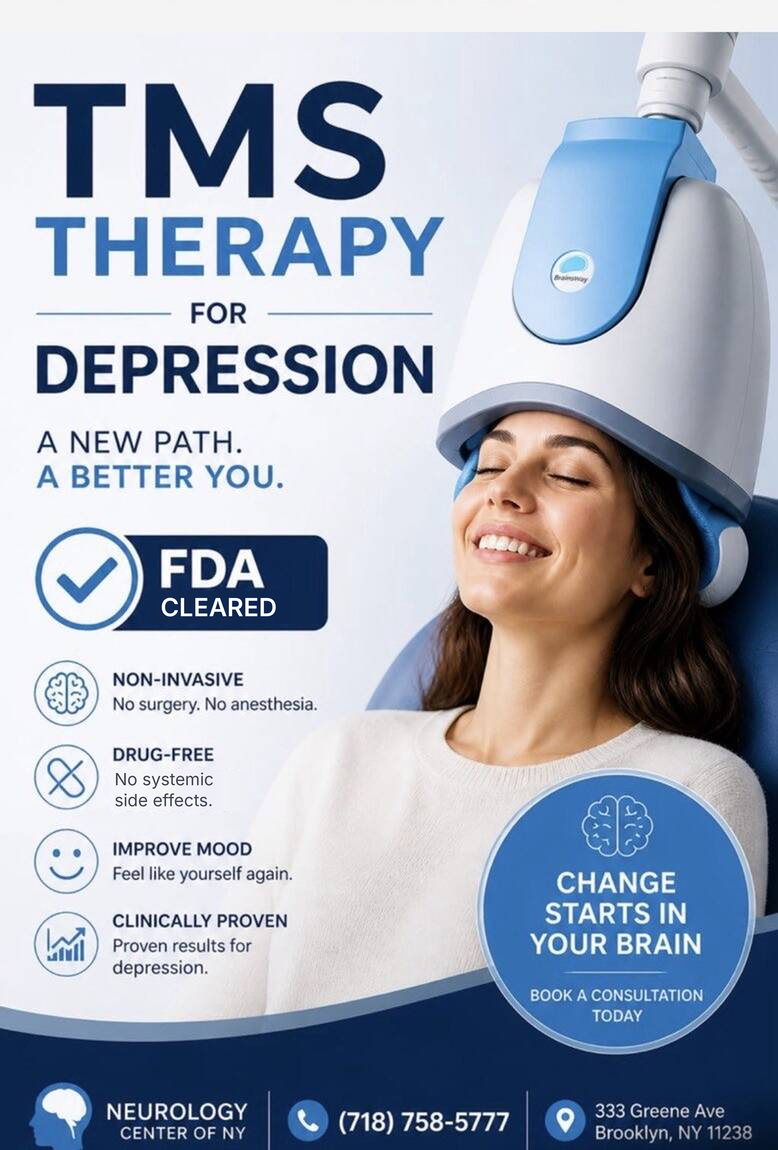
Transcranial magnetic stimulation (TMS) uses brief magnetic pulses to stimulate areas of the brain involved in regulating mood. The pulses are delivered through a cushioned helmet while you sit in a treatment chair.
TMS is not electroconvulsive therapy (ECT). It needs no anesthesia or sedation, and you remain awake and alert the whole time.
Who TMS may help
TMS may be an option if you are an adult and:
- you have been diagnosed with major depressive disorder;
- You have tried one or more antidepressant medications (and often talk therapy) without significant improvement in your symptoms.
- When Antidepressants Stop Working, Your Journey to Real Relief Begins Here.


Our technology: BrainsWay Deep TMS
Deep TMS™ Coverage to Over 70 Million Covered Lives
We treat it with the BrainsWay Deep TMS system. It received FDA clearance for major depressive disorder in 2013 and for reducing anxiety symptoms in depression in 2021. BrainsWay is a global leader in advanced noninvasive neurostimulation treatments for mental health disorders.
You are treated on site at our Brooklyn office, 333 Greene Ave, by a team led by Dr. Kogan, board-certified neurologist and neuromuscular specialist.
What to expect
- Consultation. Dr. Kogan reviews your diagnosis, the medications you have tried and your medical history.
- First session. We fit the helmet and set the treatment for you.
- Treatment course. Sessions take about 20 to 30 minutes. Frequency: 5 days per week (Monday through Friday). Duration: 4 to 6 weeks, typically totaling 30 to 36 sessions.
- Follow-up. Dr. Kogan tracks your symptoms through the course and may recommend continuation sessions afterward.
During a session you sit in a chair, awake and alert. You wear earplugs because the device makes a loud clicking sound. You may feel tapping or discomfort on your scalp, which usually eases over later sessions.
No anesthesia or sedation is used. Yes, patients can safely drive themselves home immediately following a BrainsWay Deep TMS treatment session.
Safety and side effects
TMS does not involve surgery or anesthesia, but it does have side effects. In the clinical study of this system, the most common were:
- headache;
- pain or discomfort where the helmet delivers the pulses;
- jaw pain.
Seizures are rare but have occurred. The risk is higher with heavy alcohol use and with some medications, so tell us about everything you take and about your alcohol use.
Insurance and cost
We accept most major insurance plans—including Medicare—for TMS therapy.
Insurers usually ask for proof that antidepressant medication has not worked well enough before they approve TMS. Our staff verifies your benefits and requests prior authorization for you.
Insurance denial? We’ve got you covered. Ask our team about our custom monthly payment plans designed to fit your budget.
Paying without insurance? Call us for current rates.
Frequently asked questions
You may feel tapping, discomfort or pain on your scalp during the pulses, and some people get a headache. For most people this eases over later sessions. Tell the team if it bothers you.
About 20 to 30 minutes.
Five days per week (Monday through Friday) for 4 to 6 weeks, typically totaling 30 to 36 sessions. Dr. Kogan may recommend continuation sessions after that.
It varies from person to person. The clinical study measured results after four weeks of daily sessions. Dr. Kogan reviews your progress during the course.
No. In the clinical study, significantly more patients improved with Deep TMS than with a sham treatment, but not everyone responds. Dr. Kogan will discuss your other options if TMS does not help enough.
Do not stop or change any medication on your own. Dr. Kogan will tell you whether to continue it during TMS.
No. TMS uses magnetic pulses, needs no anesthesia or sedation, and you stay awake.
Yes, a documented history of treatment-resistant depression, which usually means trying and not getting adequate relief from at least two to four different antidepressant medications.
Break the Cycle of Ineffective Meds. Experience the Future of Depression Care.
Ready for a different approach? Dr. Kogan at the Neurology Center of NY specializes in FDA-cleared, non-invasive TMS therapy. Take the first step toward lasting relief today. Call 718-758-5777 or fill out our quick online form to schedule your consultation.